Justice, Freedom & Human Rights — A Journey Through History, Wisdom, and the Human Spirit
I’m delighted to share a preview of my upcoming second volume of Inspired Poetry.
This collection takes a different journey from my first volume, exploring the lives, words, courage, and convictions of historical figures who helped shape our understanding of justice, freedom, equality, and human dignity.
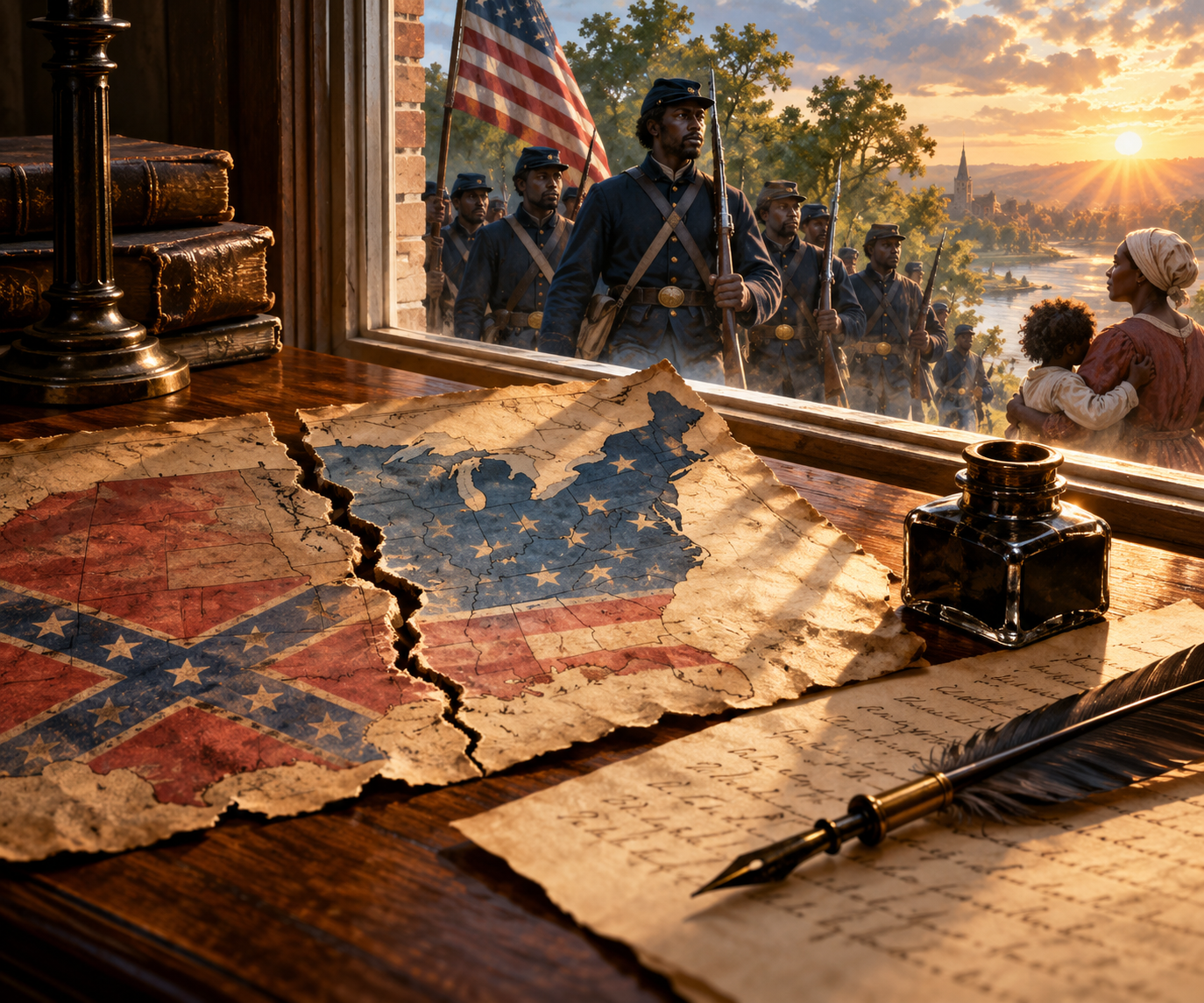
Each poem is accompanied by a visual interpretation, a brief biography of the person who inspired it, and an About the Poem reflection. My hope is that these elements enrich the reading experience without defining what the poetry must mean to you.
For this preview, I’ve chosen Abraham Lincoln, whose appeal to the “better angels of our nature” reminds us that reconciliation, compassion, and justice are not competing ideals.
The Better Angels
Inspired by Abraham Lincoln
A map was torn by fields of war,
With flags now raised on either side;
Beneath them lay an older scar
Of lives whose freedom was denied.
His pen declared a freedom due
To those enslaved where rebels reigned;
Black soldiers fought to see it through,
Though liberty was not yet gained.
As war drew near its bitter end,
He named the cause: the human chains;
The wound was more than war could mend
While its injustice still remained.
He called for mercy after war,
For care of those the fighting broke;
Yet justice had to reach much more
Than kindness in the words he spoke.
Whenever we are called to mend
What fear and violence have torn,
What freedom will our hands defend
Before a lasting peace is born?
About Abraham Lincoln
Abraham Lincoln (1809–1865), the sixteenth president of the United States, led the country through the Civil War. In 1863 his Emancipation Proclamation declared freedom for enslaved people in areas then in rebellion; it did not end slavery everywhere, but it changed the war’s purpose and authorized Black men to serve in the Union armed forces.
In his Second Inaugural Address, Lincoln named slavery as a cause of the war and urged care after its devastation. The Thirteenth Amendment abolished slavery nationwide later in 1865. Equality remained a far longer struggle.
About the Poem
The poem begins with a broken country and the older wound beneath the war. It connects Lincoln’s call for mercy to the harder duty of confronting slavery and defending freedom in practice.
Its closing question asks what justice must accompany any attempt to mend a divided community.
A Personal Invitation
As I prepare Inspired Poetry, Volume II: Justice, Freedom & Human Rights for publication, I hope these poems encourage reflection, thoughtful conversation, and perhaps a renewed appreciation for our shared humanity.
Poetry can invite us to consider history not merely as something that happened, but as something that continues to ask questions of us.
What do the “better angels of our nature” mean to you today?
I’d love to hear your thoughts.
Michael J. Beery
Inspired Poetry, Volume II — Coming Soon
Leave a Reply